← Back to All Products
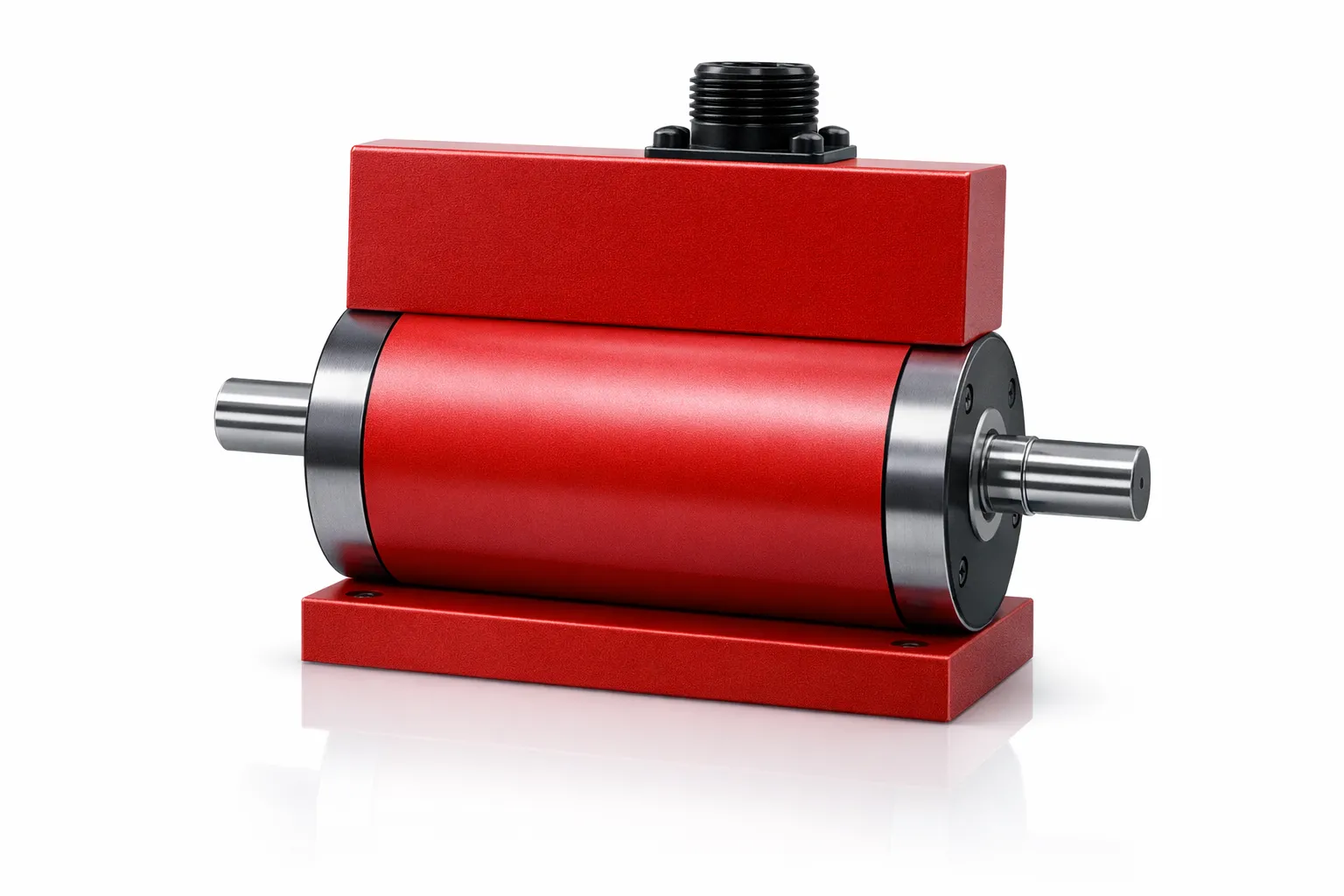
Rotary Torque Sensor
Dynamic Rotating Torque Measurement
Designed for measurement on rotating shafts, these sensors use high-quality slip-ring or wireless transmission technology to provide accurate data from moving machinery.
Proper calibration is essential for torque sensors used in precision measurement. Force & Torque Calibration Guide
Torque sensors are widely used in automotive component testing and motor verification. Sensors for Automotive Testing
Technical Specifications
Max RPM10,000 RPM
Torque RangeUp to 5000 Nm
Industries Served
Expert Guidance
Engineering Tips & FAQs
Technical advice for standard integration and mounting.
Q: When should I choose a reaction torque sensor over a rotary one for motor testing?
Rotary sensors are essential for dynamic measurements where you need to calculate efficiency (Power = Torque x RPM). Reaction sensors are better suited for static or limited-rotation applications like fastener testing because they don't have moving parts, making them maintenance-free.
Q: How does misalignment impact signal quality in slip-ring rotary torque sensors?
Misalignment introduces bending moments and vibrations that can lead to 'brush bounce' in slip-ring sensors, causing electrical noise and signal dropouts. Ensuring alignment within 0.001 inches per inch of shaft length is critical.
Q: What are the advantages of wireless telemetry over slip-rings in modern rotary torque measurement?
Wireless telemetry removes friction and wear components, allowing for much higher RPM limits (up to 15,000+ RPM) and provides a digitally modulated signal that is more resistant to EMI/RFI noise.
Ready to Work Together?
Let's discuss how our precision engineering solutions can meet your requirements.
Contact Us Today